In truth, I am not easily won over by restaurants. I mean, I like a lot of presentations at a lot of eating establishments, but mostly I think they are less splendiferous than the hype around them would suggest.
Still, through odd and fortuitous circumstances, even though I do not run with the crowd that routinely plunks down wads of cash for dinners out, I have been fortunate, through sometimes devious and sometimes insane methods, to eat at some pretty extraordinary places. And I have paid my share of cash to try to get near a chef whose food I have read about. I am willing to take out a second, third, sometimes fourth mortgage to chase down a meal someone tells me is worth the gold needed to pay for it. I have also scraped the bottom far more often than I care to remember, with dishes and dining experiences that are worth writing about because they have been so unbelievably bad.
Mostly, I like the middle range. I like family run places outside metropolitan areas. Places with a regular clientele of locals. Places where waiters complain if you leave something on the plate. Places where the diners’ ages run from 3 to 93. Where people dress up slightly, but not too much. Where the food is good and honest and fresh and flavorful.
But every once in a while I will come across a star that is listed as a superstar and it winds up having enough shine and glimmer to light up a whole galaxy with its radiance. Bouley was it. Truly one of the best ever. Because every dish was a surprise and nothing was less than it could be.
I went for a late lunch and chose the tasting menu – six sampling courses, plus three others thrown in by Chef Bouley, possibly because he likes to be generous, possibly because I was assiduously taking notes and photographing everything. As if I were writing a story. Which I am. Because Ocean is as good as an NYT review, right?
I really cannot list everything -- too tedious and dull to read, especially if you can’t run your fingers across the words and lick them in appreciation. Okay, just a smattering: a tomato gazpacho over shredded grilled shrimp, served in a martini glass; the phyllo crusted Florida shrimp, Cape Cod Bay Squid, Scuba Dived Sea scallop, Sweet Maryland Crabmeat in an Ocean Herbal Broth; the baby skate with capers and baby greens with pineapple vinaigrette; the Nova Scotia Halibut with fresh porcini mushrooms, Georgia corn, Asparagus and a Corn Shoot Sauce; the Venison with poached Bartlett pear, Swiss chard and chocolate sauce (you heard it here); the white chocolate flan with green tea glaze; the fresh chilled Rhubarb soup with cassis sorbet, sour cream ice and Beaujolais granite; the hot Valrhona soufflé with maple, chocolate and vanilla ice cream; the chocolates and cookies and espresso – they were all over the top fabulous.
Complaints? None. Oh, alright: I could have kicked the waiter’s shins a few times for the poised manner with which he delivered wrong info when pressed on some of the dishes. Advice to all the waiters who have pesky diners bugging them with Qs: go back to the kitchen and get it right, from the cooks that know what they’re plating. Please please please don’t bluff it. Cassis and sour cream do not taste, look or smell the same and they cannot be folded together and come out looking white. It just can’t be done.
But the Russian runner was disarming, and Mr. Bouley was awe-inspiring. I wish I could shine his shoes daily, just so the glow of stardom would rub off onto my fingers and everything I thereafter touched in the kitchen would have his magic.
I do fall in love with good cooks and good writers, I admit it.
Okay, a few of the pictures. Apologies for the quality. This was not a place where I could take time, sit still and fiddle with the composition. Surreptitious clicking typically means you’re going to come home, download the photos and hit delete 99% of the time. Still, I promised food – here’s food. And thank you, gorgeous and brilliant daughters, for a magnificent birthday meal.
Saturday, April 30, 2005

New York Interlude: Bouley’s
In truth, I am not easily won over by restaurants. I mean, I like a lot of presentations at a lot of eating establishments, but mostly I think they are less splendiferous than the hype around them would suggest.
Still, through odd and fortuitous circumstances, even though I do not run with the crowd that routinely plunks down wads of cash for dinners out, I have been fortunate, through sometimes devious and sometimes insane methods, to eat at some pretty extraordinary places. And I have paid my share of cash to try to get near a chef whose food I have read about. I am willing to take out a second, third, sometimes fourth mortgage to chase down a meal someone tells me is worth the gold needed to pay for it. I have also scraped the bottom far more often than I care to remember, with dishes and dining experiences that are worth writing about because they have been so unbelievably bad.
Mostly, I like the middle range. I like family run places outside metropolitan areas. Places with a regular clientele of locals. Places where waiters complain if you leave something on the plate. Places where the diners’ ages run from 3 to 93. Where people dress up slightly, but not too much. Where the food is good and honest and fresh and flavorful.
But every once in a while I will come across a star that is listed as a superstar and it winds up having enough shine and glimmer to light up a whole galaxy with its radiance. Bouley was it. Truly one of the best ever. Because every dish was a surprise and nothing was less than it could be.
I went for a late lunch and chose the tasting menu – six sampling courses, plus three others thrown in by Chef Bouley, possibly because he likes to be generous, possibly because I was assiduously taking notes and photographing everything. As if I were writing a story. Which I am. Because Ocean is as good as an NYT review, right?
I really cannot list everything -- too tedious and dull to read, especially if you can’t run your fingers across the words and lick them in appreciation. Okay, just a smattering: a tomato gazpacho over shredded grilled shrimp, served in a martini glass; the phyllo crusted Florida shrimp, Cape Cod Bay Squid, Scuba Dived Sea scallop, Sweet Maryland Crabmeat in an Ocean Herbal Broth; the baby skate with capers and baby greens with pineapple vinaigrette; the Nova Scotia Halibut with fresh porcini mushrooms, Georgia corn, Asparagus and a Corn Shoot Sauce; the Venison with poached Bartlett pear, Swiss chard and chocolate sauce (you heard it here); the white chocolate flan with green tea glaze; the fresh chilled Rhubarb soup with cassis sorbet, sour cream ice and Beaujolais granite; the hot Valrhona soufflé with maple, chocolate and vanilla ice cream; the chocolates and cookies and espresso – they were all over the top fabulous.
Complaints? None. Oh, alright: I could have kicked the waiter’s shins a few times for the poised manner with which he delivered wrong info when pressed on some of the dishes. Advice to all the waiters who have pesky diners bugging them with Qs: go back to the kitchen and get it right, from the cooks that know what they’re plating. Please please please don’t bluff it. Cassis and sour cream do not taste, look or smell the same and they cannot be folded together and come out looking white. It just can’t be done.
But the Russian runner was disarming, and Mr. Bouley was awe-inspiring. I wish I could shine his shoes daily, just so the glow of stardom would rub off onto my fingers and everything I thereafter touched in the kitchen would have his magic.
I do fall in love with good cooks and good writers, I admit it.
Okay, a few of the pictures. Apologies for the quality. This was not a place where I could take time, sit still and fiddle with the composition. Surreptitious clicking typically means you’re going to come home, download the photos and hit delete 99% of the time. Still, I promised food – here’s food. And thank you, gorgeous and brilliant daughters, for a magnificent birthday meal.
Still, through odd and fortuitous circumstances, even though I do not run with the crowd that routinely plunks down wads of cash for dinners out, I have been fortunate, through sometimes devious and sometimes insane methods, to eat at some pretty extraordinary places. And I have paid my share of cash to try to get near a chef whose food I have read about. I am willing to take out a second, third, sometimes fourth mortgage to chase down a meal someone tells me is worth the gold needed to pay for it. I have also scraped the bottom far more often than I care to remember, with dishes and dining experiences that are worth writing about because they have been so unbelievably bad.
Mostly, I like the middle range. I like family run places outside metropolitan areas. Places with a regular clientele of locals. Places where waiters complain if you leave something on the plate. Places where the diners’ ages run from 3 to 93. Where people dress up slightly, but not too much. Where the food is good and honest and fresh and flavorful.
But every once in a while I will come across a star that is listed as a superstar and it winds up having enough shine and glimmer to light up a whole galaxy with its radiance. Bouley was it. Truly one of the best ever. Because every dish was a surprise and nothing was less than it could be.
I went for a late lunch and chose the tasting menu – six sampling courses, plus three others thrown in by Chef Bouley, possibly because he likes to be generous, possibly because I was assiduously taking notes and photographing everything. As if I were writing a story. Which I am. Because Ocean is as good as an NYT review, right?
I really cannot list everything -- too tedious and dull to read, especially if you can’t run your fingers across the words and lick them in appreciation. Okay, just a smattering: a tomato gazpacho over shredded grilled shrimp, served in a martini glass; the phyllo crusted Florida shrimp, Cape Cod Bay Squid, Scuba Dived Sea scallop, Sweet Maryland Crabmeat in an Ocean Herbal Broth; the baby skate with capers and baby greens with pineapple vinaigrette; the Nova Scotia Halibut with fresh porcini mushrooms, Georgia corn, Asparagus and a Corn Shoot Sauce; the Venison with poached Bartlett pear, Swiss chard and chocolate sauce (you heard it here); the white chocolate flan with green tea glaze; the fresh chilled Rhubarb soup with cassis sorbet, sour cream ice and Beaujolais granite; the hot Valrhona soufflé with maple, chocolate and vanilla ice cream; the chocolates and cookies and espresso – they were all over the top fabulous.
Complaints? None. Oh, alright: I could have kicked the waiter’s shins a few times for the poised manner with which he delivered wrong info when pressed on some of the dishes. Advice to all the waiters who have pesky diners bugging them with Qs: go back to the kitchen and get it right, from the cooks that know what they’re plating. Please please please don’t bluff it. Cassis and sour cream do not taste, look or smell the same and they cannot be folded together and come out looking white. It just can’t be done.
But the Russian runner was disarming, and Mr. Bouley was awe-inspiring. I wish I could shine his shoes daily, just so the glow of stardom would rub off onto my fingers and everything I thereafter touched in the kitchen would have his magic.
I do fall in love with good cooks and good writers, I admit it.
Okay, a few of the pictures. Apologies for the quality. This was not a place where I could take time, sit still and fiddle with the composition. Surreptitious clicking typically means you’re going to come home, download the photos and hit delete 99% of the time. Still, I promised food – here’s food. And thank you, gorgeous and brilliant daughters, for a magnificent birthday meal.


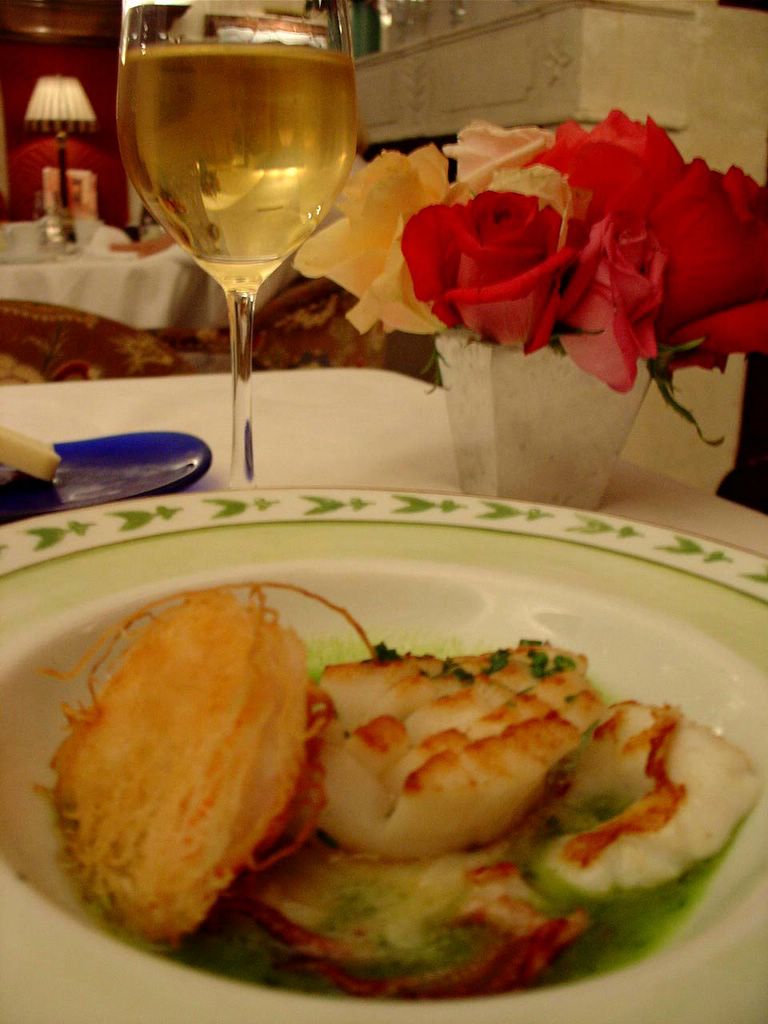
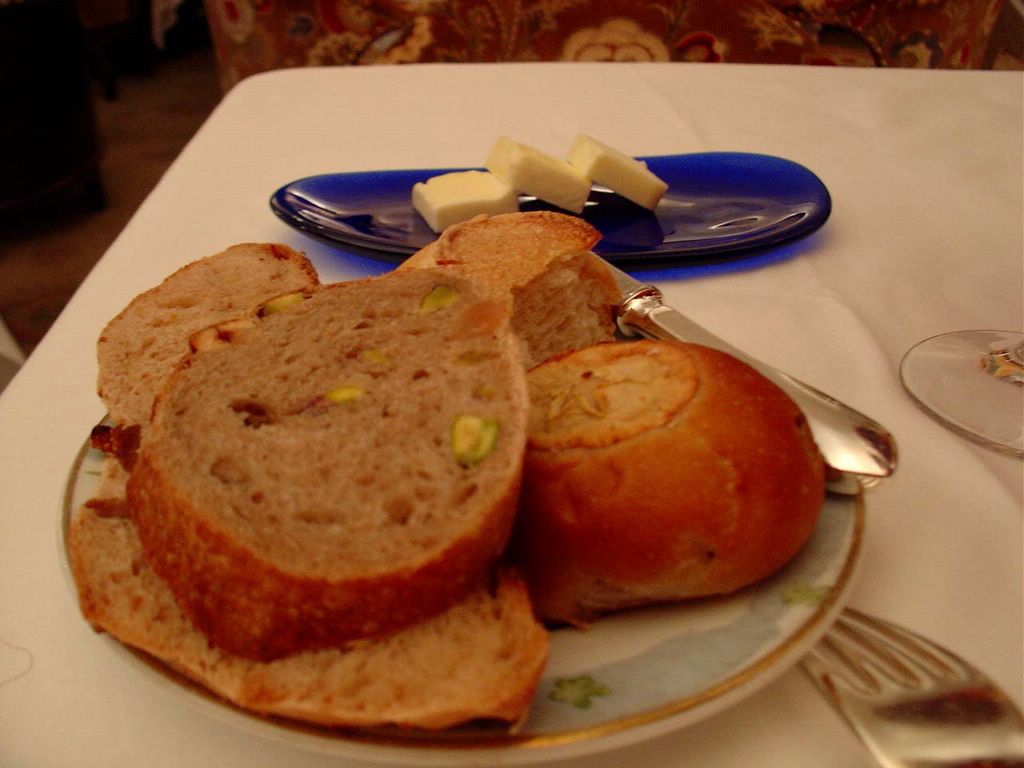




New York interlude: setting out for a lunch to whip all lunches off the charts in terms of wonderfulness
This afternoon I am to dine at Bouley.
I should be thinking ahead to the tasting menu. I want to learn, get inspired by the great chefs of the city*. But right now all I keep thinking of is my entrance into this renowned Tribeca eatery: one look at my apparel and I know what table they’ll seat me at. I’ll just have to be careful so that I wont get banged by the door as the runners zip dirty dishes past me on the way to the kitchen.
I really do not love the fact that tasting the best of the best requires dining in opulent surroundings but I am willing to make the sacrifice occasionally.
Still, the dressing up part can dampen my humble cotton-leaning enthusiasm. I do not want the hosting person to immediately sniff financial failure (or at least on the failing side of great affluence) when she or he sees me entering the room. And they can tell, just by looking at my shoes.
Today will be a disaster in the shoe department: I am forced to wear something weather appropriate – not quite snow boots, but something that wont make icicles out of my toes. I have avoided purchasing pointed stilettos thinking – dear God, this style has to pass soon so that sanity can again prevail.
But it hasn’t happened yet. And in the meantime I suffer the indignity of knowing that whatever piece of leather or cloth will be strapped to my soles is inferior and plain wrong for the fine carpets at Bouley.
Ah well, if I wanted to tromp in with kick-ass shoes, I’d have to get some kick-ass dress to go with them and now we’re talking four digit prices, just for lunch.
Between my attire, my chickening out on the sophisticated hair-cut and my blogging camera, I am going to be like a duckling bobbing in a sea of plumed swans. But the food – oh! the food will be spectacular!
*Chef David Bouley is the city’s top cooking honcho, being the only one to have ever scored a 29 in Zagat’s food ratings.
I should be thinking ahead to the tasting menu. I want to learn, get inspired by the great chefs of the city*. But right now all I keep thinking of is my entrance into this renowned Tribeca eatery: one look at my apparel and I know what table they’ll seat me at. I’ll just have to be careful so that I wont get banged by the door as the runners zip dirty dishes past me on the way to the kitchen.
I really do not love the fact that tasting the best of the best requires dining in opulent surroundings but I am willing to make the sacrifice occasionally.
Still, the dressing up part can dampen my humble cotton-leaning enthusiasm. I do not want the hosting person to immediately sniff financial failure (or at least on the failing side of great affluence) when she or he sees me entering the room. And they can tell, just by looking at my shoes.
Today will be a disaster in the shoe department: I am forced to wear something weather appropriate – not quite snow boots, but something that wont make icicles out of my toes. I have avoided purchasing pointed stilettos thinking – dear God, this style has to pass soon so that sanity can again prevail.
But it hasn’t happened yet. And in the meantime I suffer the indignity of knowing that whatever piece of leather or cloth will be strapped to my soles is inferior and plain wrong for the fine carpets at Bouley.
Ah well, if I wanted to tromp in with kick-ass shoes, I’d have to get some kick-ass dress to go with them and now we’re talking four digit prices, just for lunch.
Between my attire, my chickening out on the sophisticated hair-cut and my blogging camera, I am going to be like a duckling bobbing in a sea of plumed swans. But the food – oh! the food will be spectacular!
*Chef David Bouley is the city’s top cooking honcho, being the only one to have ever scored a 29 in Zagat’s food ratings.
New York interlude: setting out for a lunch to whip all lunches off the charts in terms of wonderfulness
This afternoon I am to dine at Bouley.
I should be thinking ahead to the tasting menu. I want to learn, get inspired by the great chefs of the city*. But right now all I keep thinking of is my entrance into this renowned Tribeca eatery: one look at my apparel and I know what table they’ll seat me at. I’ll just have to be careful so that I wont get banged by the door as the runners zip dirty dishes past me on the way to the kitchen.
I really do not love the fact that tasting the best of the best requires dining in opulent surroundings but I am willing to make the sacrifice occasionally.
Still, the dressing up part can dampen my humble cotton-leaning enthusiasm. I do not want the hosting person to immediately sniff financial failure (or at least on the failing side of great affluence) when she or he sees me entering the room. And they can tell, just by looking at my shoes.
Today will be a disaster in the shoe department: I am forced to wear something weather appropriate – not quite snow boots, but something that wont make icicles out of my toes. I have avoided purchasing pointed stilettos thinking – dear God, this style has to pass soon so that sanity can again prevail.
But it hasn’t happened yet. And in the meantime I suffer the indignity of knowing that whatever piece of leather or cloth will be strapped to my soles is inferior and plain wrong for the fine carpets at Bouley.
Ah well, if I wanted to tromp in with kick-ass shoes, I’d have to get some kick-ass dress to go with them and now we’re talking four digit prices, just for lunch.
Between my attire, my chickening out on the sophisticated hair-cut and my blogging camera, I am going to be like a duckling bobbing in a sea of plumed swans. But the food – oh! the food will be spectacular!
*Chef David Bouley is the city’s top cooking honcho, being the only one to have ever scored a 29 in Zagat’s food ratings.
I should be thinking ahead to the tasting menu. I want to learn, get inspired by the great chefs of the city*. But right now all I keep thinking of is my entrance into this renowned Tribeca eatery: one look at my apparel and I know what table they’ll seat me at. I’ll just have to be careful so that I wont get banged by the door as the runners zip dirty dishes past me on the way to the kitchen.
I really do not love the fact that tasting the best of the best requires dining in opulent surroundings but I am willing to make the sacrifice occasionally.
Still, the dressing up part can dampen my humble cotton-leaning enthusiasm. I do not want the hosting person to immediately sniff financial failure (or at least on the failing side of great affluence) when she or he sees me entering the room. And they can tell, just by looking at my shoes.
Today will be a disaster in the shoe department: I am forced to wear something weather appropriate – not quite snow boots, but something that wont make icicles out of my toes. I have avoided purchasing pointed stilettos thinking – dear God, this style has to pass soon so that sanity can again prevail.
But it hasn’t happened yet. And in the meantime I suffer the indignity of knowing that whatever piece of leather or cloth will be strapped to my soles is inferior and plain wrong for the fine carpets at Bouley.
Ah well, if I wanted to tromp in with kick-ass shoes, I’d have to get some kick-ass dress to go with them and now we’re talking four digit prices, just for lunch.
Between my attire, my chickening out on the sophisticated hair-cut and my blogging camera, I am going to be like a duckling bobbing in a sea of plumed swans. But the food – oh! the food will be spectacular!
*Chef David Bouley is the city’s top cooking honcho, being the only one to have ever scored a 29 in Zagat’s food ratings.


Friday, April 29, 2005
New York interlude: highlights
My man Jason, color specialist, the guy who can tell by just looking at me the shade of hair I had as a five year old (“it is the peak of hair color for everyone; after that it’s downhill all the way”), the guy whom I trust so much with hues and tones that I listen even when he tells me which nail polish to buy for summer sandal weather, was chatty today. He isn’t always, but today we were both in the mood.
One topic was my hair: is it time to go sophisticated (rather than fun)? I mean, I am 52 and I am heading for Paris next week. Is this the day to do the blunt little number that is so tres gentil that gentlemen start buying you un petit verre du vin?
Oh I was tempted. Really tempted. But I said to him: next time. Even though my next Jason moment will be after Paris and the only petit anything that anyone in Madison will buy me will be a spotted cow – how sophisticated is that, damn it: can I buy you a spotted cow? Much less deserving of a special hair trim.
Still, the Jason halo held. It’s as if I were with a golden spoon rather than just a few five-year-old-like golden strands. My evening flight to Chicago left 15 minutes early and I was on it, the Puck’s sandwich at O’Hare was superb, and the bar lady took one look at my hair and asked for an ID before serving me wine (honest! her eyes bypassed the entirety: I am certain that the only thing she even glanced at was my hair). Obviously she was momentarily thrown off. Had she not looked beyond the scalp, I would have been denied my glass of Chardonnay.
I’m in New York now, in a contemplative mood. It’s quiet, no one’s around. I am tempted to spend the rest of the evening sitting in front of the mirror, thinking five year old thoughts. I do not much remember what I did or thought as a five year old, living in Warsaw, looking out at the ridiculously noisy tram station just outside my window. But I sure had the hair color of all colors, if Jason has it right. Life was simple, but oh so golden.
One topic was my hair: is it time to go sophisticated (rather than fun)? I mean, I am 52 and I am heading for Paris next week. Is this the day to do the blunt little number that is so tres gentil that gentlemen start buying you un petit verre du vin?
Oh I was tempted. Really tempted. But I said to him: next time. Even though my next Jason moment will be after Paris and the only petit anything that anyone in Madison will buy me will be a spotted cow – how sophisticated is that, damn it: can I buy you a spotted cow? Much less deserving of a special hair trim.
Still, the Jason halo held. It’s as if I were with a golden spoon rather than just a few five-year-old-like golden strands. My evening flight to Chicago left 15 minutes early and I was on it, the Puck’s sandwich at O’Hare was superb, and the bar lady took one look at my hair and asked for an ID before serving me wine (honest! her eyes bypassed the entirety: I am certain that the only thing she even glanced at was my hair). Obviously she was momentarily thrown off. Had she not looked beyond the scalp, I would have been denied my glass of Chardonnay.
I’m in New York now, in a contemplative mood. It’s quiet, no one’s around. I am tempted to spend the rest of the evening sitting in front of the mirror, thinking five year old thoughts. I do not much remember what I did or thought as a five year old, living in Warsaw, looking out at the ridiculously noisy tram station just outside my window. But I sure had the hair color of all colors, if Jason has it right. Life was simple, but oh so golden.
New York interlude: highlights
My man Jason, color specialist, the guy who can tell by just looking at me the shade of hair I had as a five year old (“it is the peak of hair color for everyone; after that it’s downhill all the way”), the guy whom I trust so much with hues and tones that I listen even when he tells me which nail polish to buy for summer sandal weather, was chatty today. He isn’t always, but today we were both in the mood.
One topic was my hair: is it time to go sophisticated (rather than fun)? I mean, I am 52 and I am heading for Paris next week. Is this the day to do the blunt little number that is so tres gentil that gentlemen start buying you un petit verre du vin?
Oh I was tempted. Really tempted. But I said to him: next time. Even though my next Jason moment will be after Paris and the only petit anything that anyone in Madison will buy me will be a spotted cow – how sophisticated is that, damn it: can I buy you a spotted cow? Much less deserving of a special hair trim.
Still, the Jason halo held. It’s as if I were with a golden spoon rather than just a few five-year-old-like golden strands. My evening flight to Chicago left 15 minutes early and I was on it, the Puck’s sandwich at O’Hare was superb, and the bar lady took one look at my hair and asked for an ID before serving me wine (honest! her eyes bypassed the entirety: I am certain that the only thing she even glanced at was my hair). Obviously she was momentarily thrown off. Had she not looked beyond the scalp, I would have been denied my glass of Chardonnay.
I’m in New York now, in a contemplative mood. It’s quiet, no one’s around. I am tempted to spend the rest of the evening sitting in front of the mirror, thinking five year old thoughts. I do not much remember what I did or thought as a five year old, living in Warsaw, looking out at the ridiculously noisy tram station just outside my window. But I sure had the hair color of all colors, if Jason has it right. Life was simple, but oh so golden.
One topic was my hair: is it time to go sophisticated (rather than fun)? I mean, I am 52 and I am heading for Paris next week. Is this the day to do the blunt little number that is so tres gentil that gentlemen start buying you un petit verre du vin?
Oh I was tempted. Really tempted. But I said to him: next time. Even though my next Jason moment will be after Paris and the only petit anything that anyone in Madison will buy me will be a spotted cow – how sophisticated is that, damn it: can I buy you a spotted cow? Much less deserving of a special hair trim.
Still, the Jason halo held. It’s as if I were with a golden spoon rather than just a few five-year-old-like golden strands. My evening flight to Chicago left 15 minutes early and I was on it, the Puck’s sandwich at O’Hare was superb, and the bar lady took one look at my hair and asked for an ID before serving me wine (honest! her eyes bypassed the entirety: I am certain that the only thing she even glanced at was my hair). Obviously she was momentarily thrown off. Had she not looked beyond the scalp, I would have been denied my glass of Chardonnay.
I’m in New York now, in a contemplative mood. It’s quiet, no one’s around. I am tempted to spend the rest of the evening sitting in front of the mirror, thinking five year old thoughts. I do not much remember what I did or thought as a five year old, living in Warsaw, looking out at the ridiculously noisy tram station just outside my window. But I sure had the hair color of all colors, if Jason has it right. Life was simple, but oh so golden.
Thanks
I do not often link back to Ocean posts when I make references to them (horribly unnice of me but there you have it) and so it took me a year to notice that my links have not been working. Possibly ever. So that, when, say, an author of another blog found a fetching photo of himself on Ocean and wanted to draw the attention of the world to his stellar good looks, he found that all he got for his efforts was a link to whatever latest Ocean post was on display. It is a problem when you think you’re linking to this, and instead get this.
Thanks, Tom, for fixing the broken link. Now, if you want this, you’ll get this, not, say, this.
Thanks, Tom, for fixing the broken link. Now, if you want this, you’ll get this, not, say, this.
Thanks
I do not often link back to Ocean posts when I make references to them (horribly unnice of me but there you have it) and so it took me a year to notice that my links have not been working. Possibly ever. So that, when, say, an author of another blog found a fetching photo of himself on Ocean and wanted to draw the attention of the world to his stellar good looks, he found that all he got for his efforts was a link to whatever latest Ocean post was on display. It is a problem when you think you’re linking to this, and instead get this.
Thanks, Tom, for fixing the broken link. Now, if you want this, you’ll get this, not, say, this.
Thanks, Tom, for fixing the broken link. Now, if you want this, you’ll get this, not, say, this.
Oh the flowers I have planted here: by the hundreds! The hours I have worked here: by the thousands! Now it's time for someone else to step in.
It’s good to move out of ruts and move ruts out of your space. When you need help, why stick with the ordinary sources of support when you can reach into fresh pools of extraordinary people?
That was my reasoning when I handed over my yard to a nine-year old. He will make sure no one sprays poison on my weeds (he is quite the econut). He will every once in a while take a sharp blade to the one or two strands of grass that make it through the dandelion patch. He will be the caretaker, the observer, the hawk.
Why him? Oh, maybe I see myself being nine again, loving the yard in my grandparents’ house. I see myself tending flowers there, next to my grandfather’s, picking cherries and fraises de bois, I see myself buying an American skateboard (remember those?) and taking it for the summer to that Polish village, only to find that it does not work where there is no pavement!
I see myself not weighed down by burdensome decisions that have to be made later in life, like forty-three years later. I see myself smiling with friendship toward people I meet – even older neighbors, age meaning nothing, friendship meaning doing things for someone and then dousing them with a water pistol.
So he gets my vote of confidence. And if he and his pals find cool ways to play here while he’s in charge, how wonderful that would be. Yards and houses should not stand empty, not when there are so many out there who would know how to care for them and how to enjoy them.
That was my reasoning when I handed over my yard to a nine-year old. He will make sure no one sprays poison on my weeds (he is quite the econut). He will every once in a while take a sharp blade to the one or two strands of grass that make it through the dandelion patch. He will be the caretaker, the observer, the hawk.
Why him? Oh, maybe I see myself being nine again, loving the yard in my grandparents’ house. I see myself tending flowers there, next to my grandfather’s, picking cherries and fraises de bois, I see myself buying an American skateboard (remember those?) and taking it for the summer to that Polish village, only to find that it does not work where there is no pavement!
I see myself not weighed down by burdensome decisions that have to be made later in life, like forty-three years later. I see myself smiling with friendship toward people I meet – even older neighbors, age meaning nothing, friendship meaning doing things for someone and then dousing them with a water pistol.
So he gets my vote of confidence. And if he and his pals find cool ways to play here while he’s in charge, how wonderful that would be. Yards and houses should not stand empty, not when there are so many out there who would know how to care for them and how to enjoy them.
Oh the flowers I have planted here: by the hundreds! The hours I have worked here: by the thousands! Now it's time for someone else to step in.
It’s good to move out of ruts and move ruts out of your space. When you need help, why stick with the ordinary sources of support when you can reach into fresh pools of extraordinary people?
That was my reasoning when I handed over my yard to a nine-year old. He will make sure no one sprays poison on my weeds (he is quite the econut). He will every once in a while take a sharp blade to the one or two strands of grass that make it through the dandelion patch. He will be the caretaker, the observer, the hawk.
Why him? Oh, maybe I see myself being nine again, loving the yard in my grandparents’ house. I see myself tending flowers there, next to my grandfather’s, picking cherries and fraises de bois, I see myself buying an American skateboard (remember those?) and taking it for the summer to that Polish village, only to find that it does not work where there is no pavement!
I see myself not weighed down by burdensome decisions that have to be made later in life, like forty-three years later. I see myself smiling with friendship toward people I meet – even older neighbors, age meaning nothing, friendship meaning doing things for someone and then dousing them with a water pistol.
So he gets my vote of confidence. And if he and his pals find cool ways to play here while he’s in charge, how wonderful that would be. Yards and houses should not stand empty, not when there are so many out there who would know how to care for them and how to enjoy them.
That was my reasoning when I handed over my yard to a nine-year old. He will make sure no one sprays poison on my weeds (he is quite the econut). He will every once in a while take a sharp blade to the one or two strands of grass that make it through the dandelion patch. He will be the caretaker, the observer, the hawk.
Why him? Oh, maybe I see myself being nine again, loving the yard in my grandparents’ house. I see myself tending flowers there, next to my grandfather’s, picking cherries and fraises de bois, I see myself buying an American skateboard (remember those?) and taking it for the summer to that Polish village, only to find that it does not work where there is no pavement!
I see myself not weighed down by burdensome decisions that have to be made later in life, like forty-three years later. I see myself smiling with friendship toward people I meet – even older neighbors, age meaning nothing, friendship meaning doing things for someone and then dousing them with a water pistol.
So he gets my vote of confidence. And if he and his pals find cool ways to play here while he’s in charge, how wonderful that would be. Yards and houses should not stand empty, not when there are so many out there who would know how to care for them and how to enjoy them.

Thursday, April 28, 2005
If it’s Friday, it must be…???
I realized today that I will be spending each of the next five Fridays in a different place and only one of those will be Madison. Tomorrow I am off to New York again where I will be preparing myself for an important event this Saturday: the consumption of a spectacular lunch.
That I can spend two days thinking about a spectacular lunch says tons about me (that my days are indeed structured around stuffing food into my face). And that I am happy to be roaming this month says even more.
A friend said just this past week that for her, knowledge and insight came from things she read and observed in her immediate environment. I argued the opposite: for me, displacement creates the necessary agitation to shake things up and throw out some new patterns for the brain to interpret.
I’m ready for it. And so is Ocean.
That I can spend two days thinking about a spectacular lunch says tons about me (that my days are indeed structured around stuffing food into my face). And that I am happy to be roaming this month says even more.
A friend said just this past week that for her, knowledge and insight came from things she read and observed in her immediate environment. I argued the opposite: for me, displacement creates the necessary agitation to shake things up and throw out some new patterns for the brain to interpret.
I’m ready for it. And so is Ocean.
If it’s Friday, it must be…???
I realized today that I will be spending each of the next five Fridays in a different place and only one of those will be Madison. Tomorrow I am off to New York again where I will be preparing myself for an important event this Saturday: the consumption of a spectacular lunch.
That I can spend two days thinking about a spectacular lunch says tons about me (that my days are indeed structured around stuffing food into my face). And that I am happy to be roaming this month says even more.
A friend said just this past week that for her, knowledge and insight came from things she read and observed in her immediate environment. I argued the opposite: for me, displacement creates the necessary agitation to shake things up and throw out some new patterns for the brain to interpret.
I’m ready for it. And so is Ocean.
That I can spend two days thinking about a spectacular lunch says tons about me (that my days are indeed structured around stuffing food into my face). And that I am happy to be roaming this month says even more.
A friend said just this past week that for her, knowledge and insight came from things she read and observed in her immediate environment. I argued the opposite: for me, displacement creates the necessary agitation to shake things up and throw out some new patterns for the brain to interpret.
I’m ready for it. And so is Ocean.
Ladders
Two nights ago, a neighbor took me out to dinner in honor of my promotion. Now, you could say that it was a little premature, since the i’s have not been dotted and being rather pessimistic about linear progression toward happy outcomes, I am certain that the entire thing will derail and I will be left unemployed with one of those cardboard signs saying “I am a lawyer without an income; feed me.” (I do realize that I may get rotten tomatoes in my tin rather than real cash with that sign, but one has to be honest.)
The reason I am writing about this now is that after protesting and saying “you don’t have to do that” about a dozen times, it struck me how momentous this step up really is. Because after it, there are no more promotions left for me: I will have reached the final stage of career advancement and all that’s left is to be booted out (you never know), rather than up.
Some might regard this as tremendous success. I am 52, I interrupted my career climb many times and here I am, now forever stuck at this same level of my professional status until I retire or kick my own tinny little bucket.
But it has not been an effortless ascent. I changed career paths three times in the course of my studies. And once I settled on law, the kiddies came, each choosing her birth date to coincide with the beginning of a new semester of law school. With my law degree, I still hop scotched around the profession, switching from practice, to teaching how to practice, and finally to “just” teaching.
Job security has also been elusive. Until the last decade, much of my work was funded by grants written by me to agencies and foundations that I felt sure would reject my projects, my work, my life, throwing me out with the heap of paper rubbish that routinely accumulates on their desks. I will never forget the day I traveled to DC to meet with a rep from the Department of Education concerning my most recent grant proposal. She clearly did not understand the project. Not any part of it. It was a nightmare in the making. I swear she heaped money on me in the end just to shut me up already.
Or, the interview with the nun from a Chicago foundation that was considering funding my AIDS Legal Services Project. Up to that point they had funded things like the Crane Foundation up in Baraboo. How do you make the leap from long-necked birds to AIDS? Here I was, trying to convince the nun that helping gay men (at the time AIDS was mostly about gay men) straighten out their legal messes was the way to go. We spent the entire time talking about how men got infected with HIV to begin with. I swear, up until that moment, she did not know.
My point: as I wave a fond farewell to yet another cohort of law students, I want to say – I know all about the anxiety of work v. no-work, about liking your work v. dreading each day of it, and change: most of all, I understand change. Gone are the days when you land your first professional job and you stay with it til you die (for women, I doubt that those days were ever in the offering).
And it all moves very very fast. You’re waving your diploma and the next thing someone is taking you out to dinner because you’re now senior and full, though not quite full of yourself, because you know better: were it not for good old mother fortune, it could still be you, there with the “unemployed lawyer” sign, wondering which corner brings in the biggest loot.
The reason I am writing about this now is that after protesting and saying “you don’t have to do that” about a dozen times, it struck me how momentous this step up really is. Because after it, there are no more promotions left for me: I will have reached the final stage of career advancement and all that’s left is to be booted out (you never know), rather than up.
Some might regard this as tremendous success. I am 52, I interrupted my career climb many times and here I am, now forever stuck at this same level of my professional status until I retire or kick my own tinny little bucket.
But it has not been an effortless ascent. I changed career paths three times in the course of my studies. And once I settled on law, the kiddies came, each choosing her birth date to coincide with the beginning of a new semester of law school. With my law degree, I still hop scotched around the profession, switching from practice, to teaching how to practice, and finally to “just” teaching.
Job security has also been elusive. Until the last decade, much of my work was funded by grants written by me to agencies and foundations that I felt sure would reject my projects, my work, my life, throwing me out with the heap of paper rubbish that routinely accumulates on their desks. I will never forget the day I traveled to DC to meet with a rep from the Department of Education concerning my most recent grant proposal. She clearly did not understand the project. Not any part of it. It was a nightmare in the making. I swear she heaped money on me in the end just to shut me up already.
Or, the interview with the nun from a Chicago foundation that was considering funding my AIDS Legal Services Project. Up to that point they had funded things like the Crane Foundation up in Baraboo. How do you make the leap from long-necked birds to AIDS? Here I was, trying to convince the nun that helping gay men (at the time AIDS was mostly about gay men) straighten out their legal messes was the way to go. We spent the entire time talking about how men got infected with HIV to begin with. I swear, up until that moment, she did not know.
My point: as I wave a fond farewell to yet another cohort of law students, I want to say – I know all about the anxiety of work v. no-work, about liking your work v. dreading each day of it, and change: most of all, I understand change. Gone are the days when you land your first professional job and you stay with it til you die (for women, I doubt that those days were ever in the offering).
And it all moves very very fast. You’re waving your diploma and the next thing someone is taking you out to dinner because you’re now senior and full, though not quite full of yourself, because you know better: were it not for good old mother fortune, it could still be you, there with the “unemployed lawyer” sign, wondering which corner brings in the biggest loot.
Ladders
Two nights ago, a neighbor took me out to dinner in honor of my promotion. Now, you could say that it was a little premature, since the i’s have not been dotted and being rather pessimistic about linear progression toward happy outcomes, I am certain that the entire thing will derail and I will be left unemployed with one of those cardboard signs saying “I am a lawyer without an income; feed me.” (I do realize that I may get rotten tomatoes in my tin rather than real cash with that sign, but one has to be honest.)
The reason I am writing about this now is that after protesting and saying “you don’t have to do that” about a dozen times, it struck me how momentous this step up really is. Because after it, there are no more promotions left for me: I will have reached the final stage of career advancement and all that’s left is to be booted out (you never know), rather than up.
Some might regard this as tremendous success. I am 52, I interrupted my career climb many times and here I am, now forever stuck at this same level of my professional status until I retire or kick my own tinny little bucket.
But it has not been an effortless ascent. I changed career paths three times in the course of my studies. And once I settled on law, the kiddies came, each choosing her birth date to coincide with the beginning of a new semester of law school. With my law degree, I still hop scotched around the profession, switching from practice, to teaching how to practice, and finally to “just” teaching.
Job security has also been elusive. Until the last decade, much of my work was funded by grants written by me to agencies and foundations that I felt sure would reject my projects, my work, my life, throwing me out with the heap of paper rubbish that routinely accumulates on their desks. I will never forget the day I traveled to DC to meet with a rep from the Department of Education concerning my most recent grant proposal. She clearly did not understand the project. Not any part of it. It was a nightmare in the making. I swear she heaped money on me in the end just to shut me up already.
Or, the interview with the nun from a Chicago foundation that was considering funding my AIDS Legal Services Project. Up to that point they had funded things like the Crane Foundation up in Baraboo. How do you make the leap from long-necked birds to AIDS? Here I was, trying to convince the nun that helping gay men (at the time AIDS was mostly about gay men) straighten out their legal messes was the way to go. We spent the entire time talking about how men got infected with HIV to begin with. I swear, up until that moment, she did not know.
My point: as I wave a fond farewell to yet another cohort of law students, I want to say – I know all about the anxiety of work v. no-work, about liking your work v. dreading each day of it, and change: most of all, I understand change. Gone are the days when you land your first professional job and you stay with it til you die (for women, I doubt that those days were ever in the offering).
And it all moves very very fast. You’re waving your diploma and the next thing someone is taking you out to dinner because you’re now senior and full, though not quite full of yourself, because you know better: were it not for good old mother fortune, it could still be you, there with the “unemployed lawyer” sign, wondering which corner brings in the biggest loot.
The reason I am writing about this now is that after protesting and saying “you don’t have to do that” about a dozen times, it struck me how momentous this step up really is. Because after it, there are no more promotions left for me: I will have reached the final stage of career advancement and all that’s left is to be booted out (you never know), rather than up.
Some might regard this as tremendous success. I am 52, I interrupted my career climb many times and here I am, now forever stuck at this same level of my professional status until I retire or kick my own tinny little bucket.
But it has not been an effortless ascent. I changed career paths three times in the course of my studies. And once I settled on law, the kiddies came, each choosing her birth date to coincide with the beginning of a new semester of law school. With my law degree, I still hop scotched around the profession, switching from practice, to teaching how to practice, and finally to “just” teaching.
Job security has also been elusive. Until the last decade, much of my work was funded by grants written by me to agencies and foundations that I felt sure would reject my projects, my work, my life, throwing me out with the heap of paper rubbish that routinely accumulates on their desks. I will never forget the day I traveled to DC to meet with a rep from the Department of Education concerning my most recent grant proposal. She clearly did not understand the project. Not any part of it. It was a nightmare in the making. I swear she heaped money on me in the end just to shut me up already.
Or, the interview with the nun from a Chicago foundation that was considering funding my AIDS Legal Services Project. Up to that point they had funded things like the Crane Foundation up in Baraboo. How do you make the leap from long-necked birds to AIDS? Here I was, trying to convince the nun that helping gay men (at the time AIDS was mostly about gay men) straighten out their legal messes was the way to go. We spent the entire time talking about how men got infected with HIV to begin with. I swear, up until that moment, she did not know.
My point: as I wave a fond farewell to yet another cohort of law students, I want to say – I know all about the anxiety of work v. no-work, about liking your work v. dreading each day of it, and change: most of all, I understand change. Gone are the days when you land your first professional job and you stay with it til you die (for women, I doubt that those days were ever in the offering).
And it all moves very very fast. You’re waving your diploma and the next thing someone is taking you out to dinner because you’re now senior and full, though not quite full of yourself, because you know better: were it not for good old mother fortune, it could still be you, there with the “unemployed lawyer” sign, wondering which corner brings in the biggest loot.
Wednesday, April 27, 2005
Where the author of Ocean and Camille Paglia find themselves to be odd bedfellows, united in the belief that Americans need more angst to write well
Much can be said about Paglia’s appearance at Borders tonight. Much. I took notes, if only to document this point of much-ness. [For cool photos and a more thorough analysis than you’re going to find here, check out Althouse.]
But I knew instantly which statement of hers would compel me to write an Ocean post, the minute she spit out the words (and if you ever heard her talk you would understand the appropriateness of my word choice here), for the woman doesn’t really talk: she throws sentences out in a cascade of fire and ice so that you’re at once entertained, enthralled, repelled – depending on your own personal inclination.
Here’s how it went. We were at the Q/A phase of the evening. Someone asked what she thought of the multitude of creative writing programs out there.
Her words (on this one point), crudely paraphrased by me: Can you make good art in the school context? Shouldn’t it come out of life itself?
And as she was about to say the above, I wanted to raise my hand and ask this of the questioner: Can you make good art in the school context? Shouldn’t it come out of life itself?
Before I could applaud wildly her insistence that one must live the adventurous life to be able to write the next great American novel, she moved on to an elaboration of this theme:
The trouble is that middle-class white America has never had anything happen to them and so really, it has nothing to write about.
And as she was saying this, I was thinking of all the Europeans (Poles especially) who fully believe that the trouble is that middle-class white America has never had anything happen to them and so really, it has nothing to write about.
We then witnessed Paglia stage an expressive portrayal (all gestures and sentences quickly delivered, darting at you from the podium) of where American novels have been forced to tread: forty years of writing about pills and suicide and mental breakdown and stepfathers making passes at stepchildren and divorce and AIDS and cancer and chemotherapy and prozac! Personal dramas detailed in horribly graphic ways until you cannot stand it anymore! [Not that some of these may not deserve the high drama status. Her point: an encounter with personal drama of this nature does not in and of itself spur great text.]
Of course, I can be guilty of this as well: guilty of exploiting (in my writing here, for instance) the internal sagas until I make myself retch. I am so adept at picking up the malaise of the moment, the personal tragedy du jour from my immediate environment!
But it’s short-lived. I am a product of a thousand + years of Polish history, where I am on safe ground again. There, I have enough tragedy and drama to help elevate my own angst to such levels that I need not ever fear drowning in an American white middle-class un-cataclysmic environment ever again.
But I knew instantly which statement of hers would compel me to write an Ocean post, the minute she spit out the words (and if you ever heard her talk you would understand the appropriateness of my word choice here), for the woman doesn’t really talk: she throws sentences out in a cascade of fire and ice so that you’re at once entertained, enthralled, repelled – depending on your own personal inclination.
Here’s how it went. We were at the Q/A phase of the evening. Someone asked what she thought of the multitude of creative writing programs out there.
Her words (on this one point), crudely paraphrased by me: Can you make good art in the school context? Shouldn’t it come out of life itself?
And as she was about to say the above, I wanted to raise my hand and ask this of the questioner: Can you make good art in the school context? Shouldn’t it come out of life itself?
Before I could applaud wildly her insistence that one must live the adventurous life to be able to write the next great American novel, she moved on to an elaboration of this theme:
The trouble is that middle-class white America has never had anything happen to them and so really, it has nothing to write about.
And as she was saying this, I was thinking of all the Europeans (Poles especially) who fully believe that the trouble is that middle-class white America has never had anything happen to them and so really, it has nothing to write about.
We then witnessed Paglia stage an expressive portrayal (all gestures and sentences quickly delivered, darting at you from the podium) of where American novels have been forced to tread: forty years of writing about pills and suicide and mental breakdown and stepfathers making passes at stepchildren and divorce and AIDS and cancer and chemotherapy and prozac! Personal dramas detailed in horribly graphic ways until you cannot stand it anymore! [Not that some of these may not deserve the high drama status. Her point: an encounter with personal drama of this nature does not in and of itself spur great text.]
Of course, I can be guilty of this as well: guilty of exploiting (in my writing here, for instance) the internal sagas until I make myself retch. I am so adept at picking up the malaise of the moment, the personal tragedy du jour from my immediate environment!
But it’s short-lived. I am a product of a thousand + years of Polish history, where I am on safe ground again. There, I have enough tragedy and drama to help elevate my own angst to such levels that I need not ever fear drowning in an American white middle-class un-cataclysmic environment ever again.
Where the author of Ocean and Camille Paglia find themselves to be odd bedfellows, united in the belief that Americans need more angst to write well
Much can be said about Paglia’s appearance at Borders tonight. Much. I took notes, if only to document this point of much-ness. [For cool photos and a more thorough analysis than you’re going to find here, check out Althouse.]
But I knew instantly which statement of hers would compel me to write an Ocean post, the minute she spit out the words (and if you ever heard her talk you would understand the appropriateness of my word choice here), for the woman doesn’t really talk: she throws sentences out in a cascade of fire and ice so that you’re at once entertained, enthralled, repelled – depending on your own personal inclination.
Here’s how it went. We were at the Q/A phase of the evening. Someone asked what she thought of the multitude of creative writing programs out there.
Her words (on this one point), crudely paraphrased by me: Can you make good art in the school context? Shouldn’t it come out of life itself?
And as she was about to say the above, I wanted to raise my hand and ask this of the questioner: Can you make good art in the school context? Shouldn’t it come out of life itself?
Before I could applaud wildly her insistence that one must live the adventurous life to be able to write the next great American novel, she moved on to an elaboration of this theme:
The trouble is that middle-class white America has never had anything happen to them and so really, it has nothing to write about.
And as she was saying this, I was thinking of all the Europeans (Poles especially) who fully believe that the trouble is that middle-class white America has never had anything happen to them and so really, it has nothing to write about.
We then witnessed Paglia stage an expressive portrayal (all gestures and sentences quickly delivered, darting at you from the podium) of where American novels have been forced to tread: forty years of writing about pills and suicide and mental breakdown and stepfathers making passes at stepchildren and divorce and AIDS and cancer and chemotherapy and prozac! Personal dramas detailed in horribly graphic ways until you cannot stand it anymore! [Not that some of these may not deserve the high drama status. Her point: an encounter with personal drama of this nature does not in and of itself spur great text.]
Of course, I can be guilty of this as well: guilty of exploiting (in my writing here, for instance) the internal sagas until I make myself retch. I am so adept at picking up the malaise of the moment, the personal tragedy du jour from my immediate environment!
But it’s short-lived. I am a product of a thousand + years of Polish history, where I am on safe ground again. There, I have enough tragedy and drama to help elevate my own angst to such levels that I need not ever fear drowning in an American white middle-class un-cataclysmic environment ever again.
But I knew instantly which statement of hers would compel me to write an Ocean post, the minute she spit out the words (and if you ever heard her talk you would understand the appropriateness of my word choice here), for the woman doesn’t really talk: she throws sentences out in a cascade of fire and ice so that you’re at once entertained, enthralled, repelled – depending on your own personal inclination.
Here’s how it went. We were at the Q/A phase of the evening. Someone asked what she thought of the multitude of creative writing programs out there.
Her words (on this one point), crudely paraphrased by me: Can you make good art in the school context? Shouldn’t it come out of life itself?
And as she was about to say the above, I wanted to raise my hand and ask this of the questioner: Can you make good art in the school context? Shouldn’t it come out of life itself?
Before I could applaud wildly her insistence that one must live the adventurous life to be able to write the next great American novel, she moved on to an elaboration of this theme:
The trouble is that middle-class white America has never had anything happen to them and so really, it has nothing to write about.
And as she was saying this, I was thinking of all the Europeans (Poles especially) who fully believe that the trouble is that middle-class white America has never had anything happen to them and so really, it has nothing to write about.
We then witnessed Paglia stage an expressive portrayal (all gestures and sentences quickly delivered, darting at you from the podium) of where American novels have been forced to tread: forty years of writing about pills and suicide and mental breakdown and stepfathers making passes at stepchildren and divorce and AIDS and cancer and chemotherapy and prozac! Personal dramas detailed in horribly graphic ways until you cannot stand it anymore! [Not that some of these may not deserve the high drama status. Her point: an encounter with personal drama of this nature does not in and of itself spur great text.]
Of course, I can be guilty of this as well: guilty of exploiting (in my writing here, for instance) the internal sagas until I make myself retch. I am so adept at picking up the malaise of the moment, the personal tragedy du jour from my immediate environment!
But it’s short-lived. I am a product of a thousand + years of Polish history, where I am on safe ground again. There, I have enough tragedy and drama to help elevate my own angst to such levels that I need not ever fear drowning in an American white middle-class un-cataclysmic environment ever again.
The tough part
...of being a law prof is the grading of exams and finishing the last class of the Spring Semester, knowing that you will never see some of the faces again – some of them who have followed you from First Year Torts, through Second Year Family Law and now finally to Third Year Comparative Family Law. It’s 5:30, time to pack up and move on. God, I hope they do well and stay happy in their career choices.
The tough part
...of being a law prof is the grading of exams and finishing the last class of the Spring Semester, knowing that you will never see some of the faces again – some of them who have followed you from First Year Torts, through Second Year Family Law and now finally to Third Year Comparative Family Law. It’s 5:30, time to pack up and move on. God, I hope they do well and stay happy in their career choices.
A European Identity
It’s emerging quietly, slowly but steadily: a sense among those in Europe of being European rather than remaining tied to any one nation. (The IHT describes this phenomenon here.)
And I agree. It’s not that taking on this identity requires shedding layers of, say, Polishness. Rather, over time, you find yourself incorporating a growing number of habits and inclinations whose source lies outside the borders of your own country.
In recent years I have oftentimes referred to myself as being European and only after saying it would I catch myself and add quickly – I’m actually Polish.
Is the EU at the root of this shift? Some say indeed, it is. With the loosening of trade, travel, work and study between nations, multiculturalism is now a requirement of professional -- and personal -- success. Rather than homogenizing the continent, the EU has created an expectation of feeling at ease with a diverse set of behaviors that are multinational in nature (not the least of which is the expectation of familiarity with at least 3 European languages).
There are two forces at work here, I think: the adherence to values that are thought of as essentially European at the moment. The IHT article lists these as a belief in social democracy, in quality of life issues (as opposed to an unwavering commitment to a strong work ethic), in a rejection of armed conflict as a means toward achieving political objectives.
But separately, there is the shaking up of a cocktail of behaviors that have the markings of the French, the Polish, the Italian, and incorporating them into your own routines. And perhaps in the process, there will be a Darwinian selection of the most servicible, delicious habits, so that the true European will find herself grabbing a café and a croissant on the way to work, reading the novel on the subway, pausing for a 90 minute lunch with a friend (I suppose a brat and beer would be favored by some), ending with a spot of tea at 5 and sitting down to an al fresco dinner at 10 pm. Wait a minute, is my idea of Europeanness mostly centered around food?? Chacune ses gouts.
And I agree. It’s not that taking on this identity requires shedding layers of, say, Polishness. Rather, over time, you find yourself incorporating a growing number of habits and inclinations whose source lies outside the borders of your own country.
In recent years I have oftentimes referred to myself as being European and only after saying it would I catch myself and add quickly – I’m actually Polish.
Is the EU at the root of this shift? Some say indeed, it is. With the loosening of trade, travel, work and study between nations, multiculturalism is now a requirement of professional -- and personal -- success. Rather than homogenizing the continent, the EU has created an expectation of feeling at ease with a diverse set of behaviors that are multinational in nature (not the least of which is the expectation of familiarity with at least 3 European languages).
There are two forces at work here, I think: the adherence to values that are thought of as essentially European at the moment. The IHT article lists these as a belief in social democracy, in quality of life issues (as opposed to an unwavering commitment to a strong work ethic), in a rejection of armed conflict as a means toward achieving political objectives.
But separately, there is the shaking up of a cocktail of behaviors that have the markings of the French, the Polish, the Italian, and incorporating them into your own routines. And perhaps in the process, there will be a Darwinian selection of the most servicible, delicious habits, so that the true European will find herself grabbing a café and a croissant on the way to work, reading the novel on the subway, pausing for a 90 minute lunch with a friend (I suppose a brat and beer would be favored by some), ending with a spot of tea at 5 and sitting down to an al fresco dinner at 10 pm. Wait a minute, is my idea of Europeanness mostly centered around food?? Chacune ses gouts.
A European Identity
It’s emerging quietly, slowly but steadily: a sense among those in Europe of being European rather than remaining tied to any one nation. (The IHT describes this phenomenon here.)
And I agree. It’s not that taking on this identity requires shedding layers of, say, Polishness. Rather, over time, you find yourself incorporating a growing number of habits and inclinations whose source lies outside the borders of your own country.
In recent years I have oftentimes referred to myself as being European and only after saying it would I catch myself and add quickly – I’m actually Polish.
Is the EU at the root of this shift? Some say indeed, it is. With the loosening of trade, travel, work and study between nations, multiculturalism is now a requirement of professional -- and personal -- success. Rather than homogenizing the continent, the EU has created an expectation of feeling at ease with a diverse set of behaviors that are multinational in nature (not the least of which is the expectation of familiarity with at least 3 European languages).
There are two forces at work here, I think: the adherence to values that are thought of as essentially European at the moment. The IHT article lists these as a belief in social democracy, in quality of life issues (as opposed to an unwavering commitment to a strong work ethic), in a rejection of armed conflict as a means toward achieving political objectives.
But separately, there is the shaking up of a cocktail of behaviors that have the markings of the French, the Polish, the Italian, and incorporating them into your own routines. And perhaps in the process, there will be a Darwinian selection of the most servicible, delicious habits, so that the true European will find herself grabbing a café and a croissant on the way to work, reading the novel on the subway, pausing for a 90 minute lunch with a friend (I suppose a brat and beer would be favored by some), ending with a spot of tea at 5 and sitting down to an al fresco dinner at 10 pm. Wait a minute, is my idea of Europeanness mostly centered around food?? Chacune ses gouts.
And I agree. It’s not that taking on this identity requires shedding layers of, say, Polishness. Rather, over time, you find yourself incorporating a growing number of habits and inclinations whose source lies outside the borders of your own country.
In recent years I have oftentimes referred to myself as being European and only after saying it would I catch myself and add quickly – I’m actually Polish.
Is the EU at the root of this shift? Some say indeed, it is. With the loosening of trade, travel, work and study between nations, multiculturalism is now a requirement of professional -- and personal -- success. Rather than homogenizing the continent, the EU has created an expectation of feeling at ease with a diverse set of behaviors that are multinational in nature (not the least of which is the expectation of familiarity with at least 3 European languages).
There are two forces at work here, I think: the adherence to values that are thought of as essentially European at the moment. The IHT article lists these as a belief in social democracy, in quality of life issues (as opposed to an unwavering commitment to a strong work ethic), in a rejection of armed conflict as a means toward achieving political objectives.
But separately, there is the shaking up of a cocktail of behaviors that have the markings of the French, the Polish, the Italian, and incorporating them into your own routines. And perhaps in the process, there will be a Darwinian selection of the most servicible, delicious habits, so that the true European will find herself grabbing a café and a croissant on the way to work, reading the novel on the subway, pausing for a 90 minute lunch with a friend (I suppose a brat and beer would be favored by some), ending with a spot of tea at 5 and sitting down to an al fresco dinner at 10 pm. Wait a minute, is my idea of Europeanness mostly centered around food?? Chacune ses gouts.
Tuesday, April 26, 2005
So I was wrong
I posted yesterday about my new (and very-slow-moving, given time issues) interest in knitting. I wrote "men don't knit" over and over again. Ah well, what do I know. Another instance of a reader straightening out the writer. Check out MenKnit.net and the picture of the guy in his tight-fitting handknit duds. And here's another thought -- do they let women sit in on men's knitting groups? You know, just for balance... (Photo courtesy of the site.)

So I was wrong
I posted yesterday about my new (and very-slow-moving, given time issues) interest in knitting. I wrote "men don't knit" over and over again. Ah well, what do I know. Another instance of a reader straightening out the writer. Check out MenKnit.net and the picture of the guy in his tight-fitting handknit duds. And here's another thought -- do they let women sit in on men's knitting groups? You know, just for balance... (Photo courtesy of the site.)
The thinking behind the reading
I can imagine what an average Ocean reader has to contend with: a blog that isn’t all that enigmatic but isn’t all that clear either. Say a reader clicks on to Ocean this morning. Isn’t it likely that s/he would have this reaction to the post (immediately preceding this one)? [Assuming that s/he would have time to kill. Though remember, it takes longer to read/write something than to think it.]
Oh! She posted early. Or did she adjust the time on the post? No, she’s always posting before dawn on Tuesdays and Thursdays. Hmmm, something about a flower. In her house. Boring, boring, boring! Jesus, can’t she find something interesting in the media to comment on if her life is so prosaic?
Pretty picture though. A little blurry, impressionistic sort of. But the carpet kills the image. Why do people have off-white carpet? So passé.
Wait, maybe she’s not really writing about the flower. Something about it blossoming even though it’s not supposed to. Nature, nurture… Now what's that all about?
I suppose she could be saying that if you don’t nurture something it dies. You know I had a boyfriend once. Loved him to pieces. Separated from him, didn’t see him for twenty years, saw him again – felt nothing. For me, the love died. It was sad, actually.
So is this the opposite? Tending to something makes it vibrant and healthy and alive, even against all odds? What a bunch of clichés!
Naaah, she’s probably just writing about flowers. Who the hell can tell though. Such a pretentious and Polish thing to do: they’re all about allusions, never plain in your face text. Crazy! Tell it like it is next time.
Oh! She posted early. Or did she adjust the time on the post? No, she’s always posting before dawn on Tuesdays and Thursdays. Hmmm, something about a flower. In her house. Boring, boring, boring! Jesus, can’t she find something interesting in the media to comment on if her life is so prosaic?
Pretty picture though. A little blurry, impressionistic sort of. But the carpet kills the image. Why do people have off-white carpet? So passé.
Wait, maybe she’s not really writing about the flower. Something about it blossoming even though it’s not supposed to. Nature, nurture… Now what's that all about?
I suppose she could be saying that if you don’t nurture something it dies. You know I had a boyfriend once. Loved him to pieces. Separated from him, didn’t see him for twenty years, saw him again – felt nothing. For me, the love died. It was sad, actually.
So is this the opposite? Tending to something makes it vibrant and healthy and alive, even against all odds? What a bunch of clichés!
Naaah, she’s probably just writing about flowers. Who the hell can tell though. Such a pretentious and Polish thing to do: they’re all about allusions, never plain in your face text. Crazy! Tell it like it is next time.
The thinking behind the reading
I can imagine what an average Ocean reader has to contend with: a blog that isn’t all that enigmatic but isn’t all that clear either. Say a reader clicks on to Ocean this morning. Isn’t it likely that s/he would have this reaction to the post (immediately preceding this one)? [Assuming that s/he would have time to kill. Though remember, it takes longer to read/write something than to think it.]
Oh! She posted early. Or did she adjust the time on the post? No, she’s always posting before dawn on Tuesdays and Thursdays. Hmmm, something about a flower. In her house. Boring, boring, boring! Jesus, can’t she find something interesting in the media to comment on if her life is so prosaic?
Pretty picture though. A little blurry, impressionistic sort of. But the carpet kills the image. Why do people have off-white carpet? So passé.
Wait, maybe she’s not really writing about the flower. Something about it blossoming even though it’s not supposed to. Nature, nurture… Now what's that all about?
I suppose she could be saying that if you don’t nurture something it dies. You know I had a boyfriend once. Loved him to pieces. Separated from him, didn’t see him for twenty years, saw him again – felt nothing. For me, the love died. It was sad, actually.
So is this the opposite? Tending to something makes it vibrant and healthy and alive, even against all odds? What a bunch of clichés!
Naaah, she’s probably just writing about flowers. Who the hell can tell though. Such a pretentious and Polish thing to do: they’re all about allusions, never plain in your face text. Crazy! Tell it like it is next time.
Oh! She posted early. Or did she adjust the time on the post? No, she’s always posting before dawn on Tuesdays and Thursdays. Hmmm, something about a flower. In her house. Boring, boring, boring! Jesus, can’t she find something interesting in the media to comment on if her life is so prosaic?
Pretty picture though. A little blurry, impressionistic sort of. But the carpet kills the image. Why do people have off-white carpet? So passé.
Wait, maybe she’s not really writing about the flower. Something about it blossoming even though it’s not supposed to. Nature, nurture… Now what's that all about?
I suppose she could be saying that if you don’t nurture something it dies. You know I had a boyfriend once. Loved him to pieces. Separated from him, didn’t see him for twenty years, saw him again – felt nothing. For me, the love died. It was sad, actually.
So is this the opposite? Tending to something makes it vibrant and healthy and alive, even against all odds? What a bunch of clichés!
Naaah, she’s probably just writing about flowers. Who the hell can tell though. Such a pretentious and Polish thing to do: they’re all about allusions, never plain in your face text. Crazy! Tell it like it is next time.
Bougainvillea blooms require sunshine, don’t they?
In the northern corner of the house there is a room that is supposed to be a plant room. I have written here in the past that unfortunately the room has almost no sunlight and therefore few plants ever produce any noticeable blooms. Green leaves? Plenty. But no blooms.
This year, however, my Bougainvillea (which I keep indoors for the winter) went nuts. Defying nature, defying my posts here about this being the dumbest plant room in the world, what with no sunlight, it threw out a profusion of blooms.
It’s amazing how much can be accomplished through perseverance and tender care. Nurture won over nature in this one.
This year, however, my Bougainvillea (which I keep indoors for the winter) went nuts. Defying nature, defying my posts here about this being the dumbest plant room in the world, what with no sunlight, it threw out a profusion of blooms.
It’s amazing how much can be accomplished through perseverance and tender care. Nurture won over nature in this one.
Bougainvillea blooms require sunshine, don’t they?
In the northern corner of the house there is a room that is supposed to be a plant room. I have written here in the past that unfortunately the room has almost no sunlight and therefore few plants ever produce any noticeable blooms. Green leaves? Plenty. But no blooms.
This year, however, my Bougainvillea (which I keep indoors for the winter) went nuts. Defying nature, defying my posts here about this being the dumbest plant room in the world, what with no sunlight, it threw out a profusion of blooms.
It’s amazing how much can be accomplished through perseverance and tender care. Nurture won over nature in this one.
This year, however, my Bougainvillea (which I keep indoors for the winter) went nuts. Defying nature, defying my posts here about this being the dumbest plant room in the world, what with no sunlight, it threw out a profusion of blooms.
It’s amazing how much can be accomplished through perseverance and tender care. Nurture won over nature in this one.

Subscribe to:
Posts (Atom)
