Saturday evening. A warm, beautiful time of day. I had spent time at the farmette and now I am heading home. Ed swings his Honda motor bike over and I get on, throwing my backpack in the yellow crate over the rear wheel.
A beautiful ride. The sky is clear, the air is turning cool.
At the condo, I unpack the back pack and reach into my dress pocket for the cell phone.
Gone.
We retrace our spin, staring down into gutters, patches of grass – nothing. It’s dark now. I dial my cell phone – it goes into a no ring mode. My gut tells me it’s been crushed somewhere between the farmette and the condo and I bear the burden of its demise.
The next day, I spend $200 on a new phone, but even that is, most likely, a mistake. Look, Ed tells me, ebay has these at half the price. I shrug and cling to my purchase.
In the afternoon I attend a memorial service. I hesitate before going. The person who died was a friend, but few would understand why. She was part of what I perceived (mistakenly? who can tell) to be a hostile neighborhood. Except, she was herself anything but hostile. She was kind and caring and so, along with a million others, I mourn her sudden and untimely death. In the end, I get on my bike and pedal over.
It is a beautiful memorial service and the room is packed with family and friends. Family and friends. I think about how easy it is to sequester yourself in pursuit of God knows what, oh, those ever important projects, so that, at the end of the day, you plug in the most important numbers into your new cell phone and you realize that you really never want to talk to anyone anymore with the exception of a precious handful or two.
I have attended funerals of older people – the grandparents and great grandparents out there, and they have been sad occasions exactly because these people have outlived their circle of influence. So that at their memorial service, the rooms are quiet and no video clips of rich and full lives fill the auditorium.
At home, I have much work to do and tomorrow I plan to delve right into it. Tonight, I am watching (of all things) the Sound of Music and thinking about the last time I saw this peculiar movie – it was in Poland, with daughters, eight years ago, under most unusual circumstances. I’m watching and thinking how even as early as five years ago, when I was just fifty, I was very forgiving of myself and how now, I am much less inclined in that direction.
Sunday, August 31, 2008

loss
Saturday evening. A warm, beautiful time of day. I had spent time at the farmette and now I am heading home. Ed swings his Honda motor bike over and I get on, throwing my backpack in the yellow crate over the rear wheel.
A beautiful ride. The sky is clear, the air is turning cool.
At the condo, I unpack the back pack and reach into my dress pocket for the cell phone.
Gone.
We retrace our spin, staring down into gutters, patches of grass – nothing. It’s dark now. I dial my cell phone – it goes into a no ring mode. My gut tells me it’s been crushed somewhere between the farmette and the condo and I bear the burden of its demise.
The next day, I spend $200 on a new phone, but even that is, most likely, a mistake. Look, Ed tells me, ebay has these at half the price. I shrug and cling to my purchase.
In the afternoon I attend a memorial service. I hesitate before going. The person who died was a friend, but few would understand why. She was part of what I perceived (mistakenly? who can tell) to be a hostile neighborhood. Except, she was herself anything but hostile. She was kind and caring and so, along with a million others, I mourn her sudden and untimely death. In the end, I get on my bike and pedal over.
It is a beautiful memorial service and the room is packed with family and friends. Family and friends. I think about how easy it is to sequester yourself in pursuit of God knows what, oh, those ever important projects, so that, at the end of the day, you plug in the most important numbers into your new cell phone and you realize that you really never want to talk to anyone anymore with the exception of a precious handful or two.
I have attended funerals of older people – the grandparents and great grandparents out there, and they have been sad occasions exactly because these people have outlived their circle of influence. So that at their memorial service, the rooms are quiet and no video clips of rich and full lives fill the auditorium.
At home, I have much work to do and tomorrow I plan to delve right into it. Tonight, I am watching (of all things) the Sound of Music and thinking about the last time I saw this peculiar movie – it was in Poland, with daughters, eight years ago, under most unusual circumstances. I’m watching and thinking how even as early as five years ago, when I was just fifty, I was very forgiving of myself and how now, I am much less inclined in that direction.
A beautiful ride. The sky is clear, the air is turning cool.
At the condo, I unpack the back pack and reach into my dress pocket for the cell phone.
Gone.
We retrace our spin, staring down into gutters, patches of grass – nothing. It’s dark now. I dial my cell phone – it goes into a no ring mode. My gut tells me it’s been crushed somewhere between the farmette and the condo and I bear the burden of its demise.
The next day, I spend $200 on a new phone, but even that is, most likely, a mistake. Look, Ed tells me, ebay has these at half the price. I shrug and cling to my purchase.
In the afternoon I attend a memorial service. I hesitate before going. The person who died was a friend, but few would understand why. She was part of what I perceived (mistakenly? who can tell) to be a hostile neighborhood. Except, she was herself anything but hostile. She was kind and caring and so, along with a million others, I mourn her sudden and untimely death. In the end, I get on my bike and pedal over.
It is a beautiful memorial service and the room is packed with family and friends. Family and friends. I think about how easy it is to sequester yourself in pursuit of God knows what, oh, those ever important projects, so that, at the end of the day, you plug in the most important numbers into your new cell phone and you realize that you really never want to talk to anyone anymore with the exception of a precious handful or two.
I have attended funerals of older people – the grandparents and great grandparents out there, and they have been sad occasions exactly because these people have outlived their circle of influence. So that at their memorial service, the rooms are quiet and no video clips of rich and full lives fill the auditorium.
At home, I have much work to do and tomorrow I plan to delve right into it. Tonight, I am watching (of all things) the Sound of Music and thinking about the last time I saw this peculiar movie – it was in Poland, with daughters, eight years ago, under most unusual circumstances. I’m watching and thinking how even as early as five years ago, when I was just fifty, I was very forgiving of myself and how now, I am much less inclined in that direction.
Saturday, August 30, 2008
family visits
During my high school years, my grandmother continued to live in the Polish village, an hour or two to the northeast of Warsaw, the same village where I spent my toddler years, the one which, to this day, has no paved road leading to it.
Nearly every week-end, we would visit her there. On Sunday afternoon, when it was time to leave, she would stand in front of the house and wave us on, crying quietly to herself. The house kept shifting for her – from quiet beyond belief, to full of the noises and demands of family. I don’t know if it was that she missed us so much on the empty days (independent types can be a handful). Maybe it was the shift from full to empty that disturbed her. A recurring feeling of loss.
I know that shift from full to empty. But I sort of envy my grandmother. She only had to wait five days for the house to be full again.
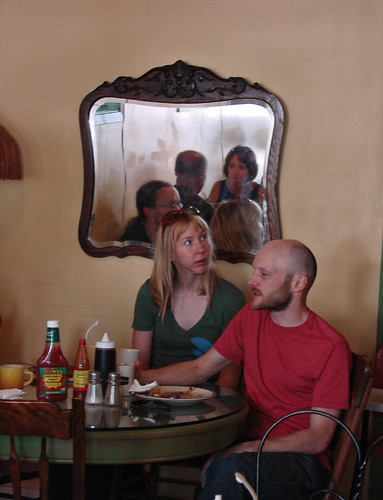
Ah well. There is always food to fill your empty spaces. On the way from the airport, we stopped at Sophia’s, where the cakes are like those my grandmother used to bake. An old world kind of place. Except for the ketchup on the tables.
Buy print 1998
After? Well, there’s the market. A hot day, but a good one for corn and tomatoes. And shedding clothes, where appropriate.

Buy print 1997

Buy print 1996
Nearly every week-end, we would visit her there. On Sunday afternoon, when it was time to leave, she would stand in front of the house and wave us on, crying quietly to herself. The house kept shifting for her – from quiet beyond belief, to full of the noises and demands of family. I don’t know if it was that she missed us so much on the empty days (independent types can be a handful). Maybe it was the shift from full to empty that disturbed her. A recurring feeling of loss.
I know that shift from full to empty. But I sort of envy my grandmother. She only had to wait five days for the house to be full again.
Ah well. There is always food to fill your empty spaces. On the way from the airport, we stopped at Sophia’s, where the cakes are like those my grandmother used to bake. An old world kind of place. Except for the ketchup on the tables.
Buy print 1998
After? Well, there’s the market. A hot day, but a good one for corn and tomatoes. And shedding clothes, where appropriate.
Buy print 1997
Buy print 1996
family visits
During my high school years, my grandmother continued to live in the Polish village, an hour or two to the northeast of Warsaw, the same village where I spent my toddler years, the one which, to this day, has no paved road leading to it.
Nearly every week-end, we would visit her there. On Sunday afternoon, when it was time to leave, she would stand in front of the house and wave us on, crying quietly to herself. The house kept shifting for her – from quiet beyond belief, to full of the noises and demands of family. I don’t know if it was that she missed us so much on the empty days (independent types can be a handful). Maybe it was the shift from full to empty that disturbed her. A recurring feeling of loss.
I know that shift from full to empty. But I sort of envy my grandmother. She only had to wait five days for the house to be full again.
Ah well. There is always food to fill your empty spaces. On the way from the airport, we stopped at Sophia’s, where the cakes are like those my grandmother used to bake. An old world kind of place. Except for the ketchup on the tables.
Buy print 1998
After? Well, there’s the market. A hot day, but a good one for corn and tomatoes. And shedding clothes, where appropriate.
Buy print 1997
Buy print 1996
Nearly every week-end, we would visit her there. On Sunday afternoon, when it was time to leave, she would stand in front of the house and wave us on, crying quietly to herself. The house kept shifting for her – from quiet beyond belief, to full of the noises and demands of family. I don’t know if it was that she missed us so much on the empty days (independent types can be a handful). Maybe it was the shift from full to empty that disturbed her. A recurring feeling of loss.
I know that shift from full to empty. But I sort of envy my grandmother. She only had to wait five days for the house to be full again.
Ah well. There is always food to fill your empty spaces. On the way from the airport, we stopped at Sophia’s, where the cakes are like those my grandmother used to bake. An old world kind of place. Except for the ketchup on the tables.
Buy print 1998
After? Well, there’s the market. A hot day, but a good one for corn and tomatoes. And shedding clothes, where appropriate.
Buy print 1997
Buy print 1996
Friday, August 29, 2008
once again
I bike to work just as the labor day week-end is about to roll in. For the past nine years, I spent labor day out east, helping daughters move. Not so this year. No one is moving.
And so I spend a day at home, with one daughter still here, though not for long (not even a full day) and I watch the politics unfold before me on television. Oh dear.
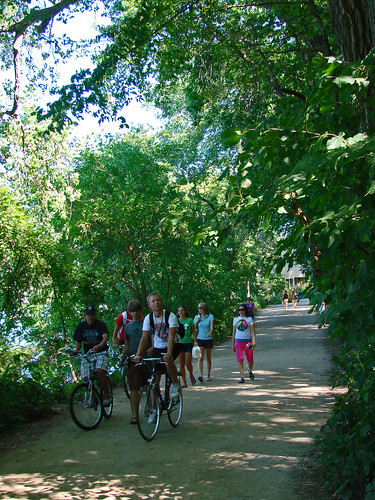
Slowly, I let go of it all and return to my focus on teaching. September is a month of concentration. Even as, at the juncture, when it is still really summer, you see students clinging to the comfortable, the easy, the sublime.
Buy print 1995

Buy print 1994

That’s them. I’m in a different orbit.
And so I spend a day at home, with one daughter still here, though not for long (not even a full day) and I watch the politics unfold before me on television. Oh dear.
Slowly, I let go of it all and return to my focus on teaching. September is a month of concentration. Even as, at the juncture, when it is still really summer, you see students clinging to the comfortable, the easy, the sublime.
Buy print 1995
Buy print 1994
That’s them. I’m in a different orbit.
once again
I bike to work just as the labor day week-end is about to roll in. For the past nine years, I spent labor day out east, helping daughters move. Not so this year. No one is moving.
And so I spend a day at home, with one daughter still here, though not for long (not even a full day) and I watch the politics unfold before me on television. Oh dear.
Slowly, I let go of it all and return to my focus on teaching. September is a month of concentration. Even as, at the juncture, when it is still really summer, you see students clinging to the comfortable, the easy, the sublime.
Buy print 1995
Buy print 1994
That’s them. I’m in a different orbit.
And so I spend a day at home, with one daughter still here, though not for long (not even a full day) and I watch the politics unfold before me on television. Oh dear.
Slowly, I let go of it all and return to my focus on teaching. September is a month of concentration. Even as, at the juncture, when it is still really summer, you see students clinging to the comfortable, the easy, the sublime.
Buy print 1995
Buy print 1994
That’s them. I’m in a different orbit.
Thursday, August 28, 2008
late afternoon caller
She was intensely engaged with the person on the other end. Sometimes she paced, sometimes she stood still, listening.
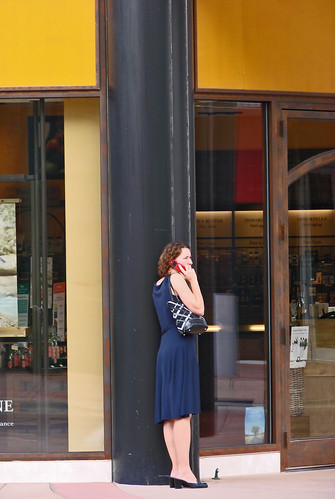
I’ve had conversations like that, where everything seemed to hinge on what was said by the other party. But not recently. And anyway, were I to be so invested in the outcome, I would probably not position myself so exquisitely in front of a store with the perfect late summer colors framing a well-dressed countenance. I’d be disheveled, in the gutter maybe, sweating it out.
Ah, poise.
I’ve had conversations like that, where everything seemed to hinge on what was said by the other party. But not recently. And anyway, were I to be so invested in the outcome, I would probably not position myself so exquisitely in front of a store with the perfect late summer colors framing a well-dressed countenance. I’d be disheveled, in the gutter maybe, sweating it out.
Ah, poise.
late afternoon caller
She was intensely engaged with the person on the other end. Sometimes she paced, sometimes she stood still, listening.
I’ve had conversations like that, where everything seemed to hinge on what was said by the other party. But not recently. And anyway, were I to be so invested in the outcome, I would probably not position myself so exquisitely in front of a store with the perfect late summer colors framing a well-dressed countenance. I’d be disheveled, in the gutter maybe, sweating it out.
Ah, poise.
I’ve had conversations like that, where everything seemed to hinge on what was said by the other party. But not recently. And anyway, were I to be so invested in the outcome, I would probably not position myself so exquisitely in front of a store with the perfect late summer colors framing a well-dressed countenance. I’d be disheveled, in the gutter maybe, sweating it out.
Ah, poise.
Wednesday, August 27, 2008
quiet time
A nap. A big snore, an exhale. I need one, you need one. I offer a serene photo from the fields bordering the farmette. I never post photos more than twenty four hours old. This one just barely makes it. Good night, sweet dreams. I’m ready to call it a day.

Buy print 1993
Buy print 1993
quiet time
A nap. A big snore, an exhale. I need one, you need one. I offer a serene photo from the fields bordering the farmette. I never post photos more than twenty four hours old. This one just barely makes it. Good night, sweet dreams. I’m ready to call it a day.
Buy print 1993
Buy print 1993
Tuesday, August 26, 2008
a half a shed (is better than none)
As if to balance the recent urban presence in Ocean posts, this day is rural to the core.
First: I went early to the farmette to check on the state of the crops. Perhaps this word (“crops”) overstates what Ed and I planted back in May. But when you put in more than three dozen tomato plants and you’re basically a city person, you think of yourself as being quite the farmer.
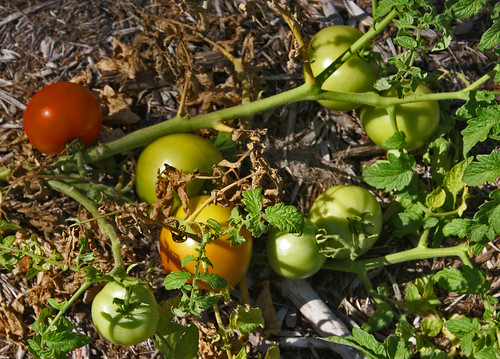
The tomatoes are doing fine, in a lazy sort of way. Ed, ever the minimalist, doesn’t stake. So the tomato field looks like a beach with plump beings who forgot the sunscreen.
Buy print 1992
Next, there are the fields of cosmos. The truth is that a packet of seeds will NOT create fields of anything. But, the flowers that finally budded, while limited in number, are magnificent.

Buy print 1991
And finally – a progress report on the Writer’s Shed Project. Today, Amos & friend hauled the skeletal structure to Ed’s place.
It took them three hours to plomp the thing into the place and there were casualties along the way.

Inside, there is nothing. We are to fill the interior with walls, floors, lighting fixtures. Water, if Ed thinks of a way to run it in (not likely). Projected date of completion? I do not know. Maybe never?


Buy print 1990
First: I went early to the farmette to check on the state of the crops. Perhaps this word (“crops”) overstates what Ed and I planted back in May. But when you put in more than three dozen tomato plants and you’re basically a city person, you think of yourself as being quite the farmer.
The tomatoes are doing fine, in a lazy sort of way. Ed, ever the minimalist, doesn’t stake. So the tomato field looks like a beach with plump beings who forgot the sunscreen.
Buy print 1992
Next, there are the fields of cosmos. The truth is that a packet of seeds will NOT create fields of anything. But, the flowers that finally budded, while limited in number, are magnificent.
Buy print 1991
And finally – a progress report on the Writer’s Shed Project. Today, Amos & friend hauled the skeletal structure to Ed’s place.
It took them three hours to plomp the thing into the place and there were casualties along the way.
Inside, there is nothing. We are to fill the interior with walls, floors, lighting fixtures. Water, if Ed thinks of a way to run it in (not likely). Projected date of completion? I do not know. Maybe never?
Buy print 1990
a half a shed (is better than none)
As if to balance the recent urban presence in Ocean posts, this day is rural to the core.
First: I went early to the farmette to check on the state of the crops. Perhaps this word (“crops”) overstates what Ed and I planted back in May. But when you put in more than three dozen tomato plants and you’re basically a city person, you think of yourself as being quite the farmer.
The tomatoes are doing fine, in a lazy sort of way. Ed, ever the minimalist, doesn’t stake. So the tomato field looks like a beach with plump beings who forgot the sunscreen.
Buy print 1992
Next, there are the fields of cosmos. The truth is that a packet of seeds will NOT create fields of anything. But, the flowers that finally budded, while limited in number, are magnificent.
Buy print 1991
And finally – a progress report on the Writer’s Shed Project. Today, Amos & friend hauled the skeletal structure to Ed’s place.
It took them three hours to plomp the thing into the place and there were casualties along the way.
Inside, there is nothing. We are to fill the interior with walls, floors, lighting fixtures. Water, if Ed thinks of a way to run it in (not likely). Projected date of completion? I do not know. Maybe never?
Buy print 1990
First: I went early to the farmette to check on the state of the crops. Perhaps this word (“crops”) overstates what Ed and I planted back in May. But when you put in more than three dozen tomato plants and you’re basically a city person, you think of yourself as being quite the farmer.
The tomatoes are doing fine, in a lazy sort of way. Ed, ever the minimalist, doesn’t stake. So the tomato field looks like a beach with plump beings who forgot the sunscreen.
Buy print 1992
Next, there are the fields of cosmos. The truth is that a packet of seeds will NOT create fields of anything. But, the flowers that finally budded, while limited in number, are magnificent.
Buy print 1991
And finally – a progress report on the Writer’s Shed Project. Today, Amos & friend hauled the skeletal structure to Ed’s place.
It took them three hours to plomp the thing into the place and there were casualties along the way.
Inside, there is nothing. We are to fill the interior with walls, floors, lighting fixtures. Water, if Ed thinks of a way to run it in (not likely). Projected date of completion? I do not know. Maybe never?
Buy print 1990
Monday, August 25, 2008
from Chicago, one last time
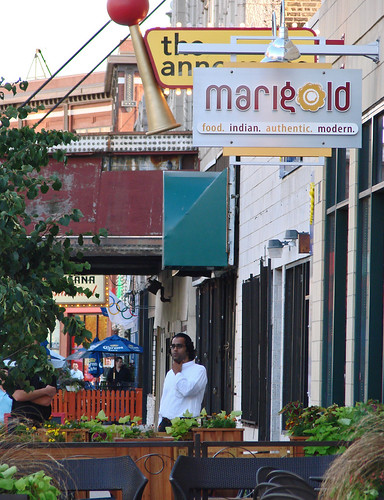
And the food. What of the food here? Oh, always exquisitely diverse. Yesterday we opted for a new Indian eatery -- Marigold. Yes, sure, there’s Devon Avenue – home to any number of Indian restaurants, but Marigold is off to the side, on Broadway, and it is superb.
Buy print 1989

Buy print 1988

Buy print 1987

Buy print 1986
We note on this Chicago trip a number of restaurant closures, or for some old favorites -- significant face changes. When people are tightening their budgets, restaurants suffer, even, and perhaps especially in the middle price range we tend to favor (one assumes rich people will never lose interest in the upper end establishments). Sometimes the face changes are very welcome. And they make me wonder: how is it that Madison’s kitchens don’t change much? I can list a dozen restaurants that people love for no reason that I can think of, except that they have been there for decades, with the same menus, the same décor, same locations. I expect my grandchildren will become familiar with them too. Yawn.
We aren’t especially welcoming of new places in Madison. We are far more critical of them than of the old places, where we demand nothing more than that they remain the same. In Chicago, people flock to the new and interesting and seem to show no loyalty to tired cooks.
I started this mini series with the statement that Chicag is a handful. Sometimes being a handful can be very interesting. And good.
Buy print 1989
Buy print 1988
Buy print 1987
Buy print 1986
We note on this Chicago trip a number of restaurant closures, or for some old favorites -- significant face changes. When people are tightening their budgets, restaurants suffer, even, and perhaps especially in the middle price range we tend to favor (one assumes rich people will never lose interest in the upper end establishments). Sometimes the face changes are very welcome. And they make me wonder: how is it that Madison’s kitchens don’t change much? I can list a dozen restaurants that people love for no reason that I can think of, except that they have been there for decades, with the same menus, the same décor, same locations. I expect my grandchildren will become familiar with them too. Yawn.
We aren’t especially welcoming of new places in Madison. We are far more critical of them than of the old places, where we demand nothing more than that they remain the same. In Chicago, people flock to the new and interesting and seem to show no loyalty to tired cooks.
I started this mini series with the statement that Chicag is a handful. Sometimes being a handful can be very interesting. And good.
from Chicago, one last time
And the food. What of the food here? Oh, always exquisitely diverse. Yesterday we opted for a new Indian eatery -- Marigold. Yes, sure, there’s Devon Avenue – home to any number of Indian restaurants, but Marigold is off to the side, on Broadway, and it is superb.
Buy print 1989
Buy print 1988
Buy print 1987
Buy print 1986
We note on this Chicago trip a number of restaurant closures, or for some old favorites -- significant face changes. When people are tightening their budgets, restaurants suffer, even, and perhaps especially in the middle price range we tend to favor (one assumes rich people will never lose interest in the upper end establishments). Sometimes the face changes are very welcome. And they make me wonder: how is it that Madison’s kitchens don’t change much? I can list a dozen restaurants that people love for no reason that I can think of, except that they have been there for decades, with the same menus, the same décor, same locations. I expect my grandchildren will become familiar with them too. Yawn.
We aren’t especially welcoming of new places in Madison. We are far more critical of them than of the old places, where we demand nothing more than that they remain the same. In Chicago, people flock to the new and interesting and seem to show no loyalty to tired cooks.
I started this mini series with the statement that Chicag is a handful. Sometimes being a handful can be very interesting. And good.
Buy print 1989
Buy print 1988
Buy print 1987
Buy print 1986
We note on this Chicago trip a number of restaurant closures, or for some old favorites -- significant face changes. When people are tightening their budgets, restaurants suffer, even, and perhaps especially in the middle price range we tend to favor (one assumes rich people will never lose interest in the upper end establishments). Sometimes the face changes are very welcome. And they make me wonder: how is it that Madison’s kitchens don’t change much? I can list a dozen restaurants that people love for no reason that I can think of, except that they have been there for decades, with the same menus, the same décor, same locations. I expect my grandchildren will become familiar with them too. Yawn.
We aren’t especially welcoming of new places in Madison. We are far more critical of them than of the old places, where we demand nothing more than that they remain the same. In Chicago, people flock to the new and interesting and seem to show no loyalty to tired cooks.
I started this mini series with the statement that Chicag is a handful. Sometimes being a handful can be very interesting. And good.
Sunday, August 24, 2008
from Chicago
I was going to give you a day’s respite from longer posts. I took this photo of a man on a break and thought – that’s it for today.

But then I go for an early evening walk – up and down Andersonville (once Swedish, now – who can tell; it certainly known for its high concentration of gay couples, but the ethnic dimension is unclear), then west to Lincoln Avenue and south to Lincoln Park. I pause at a park there and watch men – some dozen or more, my age mostly – play a very, very good game of boules.

The men speak another language. I’m not a Higgins, but I’m more than okay at placing languages and this one sounds familiar. But what is it?
One of the players comes over to chat. So it’s Croatian! They’re not recent immigrants. They all came between twenty and thirty years ago. But they get together every week in good weather. Fridays after work and Saturdays. And they play. And talk. It’s a good way to pass time, he tells me.
So are there still communities with demographic labels in Chicago? Do cities segregate in ways that are beneficial rather than simply exclusionary? The current thinking is that it's better to mix it all up, right? Sort of like this Swedish Andersonville Jewish Italian New York deli slash pharmacy that is also especially gay friendly?

I go back to my favorite bakery, Natalina’s – the one where she bakes, inspired by her Sicilian grandmother’s recipes and he helps, with his Lebanese family bakers’ experience. It is a wonderful place, not only for its pasteries…

Purchase photo 1985
…but also for watching what happens in the open kitchen, just behind the counter. The owners, Natalie and Nicolas are both so sensual, so deliciously focused on each other that it’s like watching an elaborate meal preparation in their own home, as she rolls the dough, slowly, with beautiful, strong arms, and he leans on the counter, waiting for another tray to come out of the oven.

Purchase photo 1984
My visits to Chicago would be greatly diminished without a stop at Natalina’s and so I ask them, nervously, because I see the framed, glowing reviews from Food and Wine and other reputable magazines on their melon colored walls – will you be relocating someday? Downtown maybe?
No… he says this slowly, as if he’s just now mulling this over. Because really, it’s not only about the business of it, it’s also the place, their place.
No, he says again, not in Chicago. Maybe in Italy?
Sicily? I prod…
No.. somewhere else…
Rome! I say, and he considers it and smiles.
I drink a shot of espresso, with a scoop of raspberry gelato at the side, I take a pack of cookies and head out, thinking that this is the new Italy, here in Andersonville, in this pasticceria. In an old Swedish neighborhood, in Chicago.
But then I go for an early evening walk – up and down Andersonville (once Swedish, now – who can tell; it certainly known for its high concentration of gay couples, but the ethnic dimension is unclear), then west to Lincoln Avenue and south to Lincoln Park. I pause at a park there and watch men – some dozen or more, my age mostly – play a very, very good game of boules.
The men speak another language. I’m not a Higgins, but I’m more than okay at placing languages and this one sounds familiar. But what is it?
One of the players comes over to chat. So it’s Croatian! They’re not recent immigrants. They all came between twenty and thirty years ago. But they get together every week in good weather. Fridays after work and Saturdays. And they play. And talk. It’s a good way to pass time, he tells me.
So are there still communities with demographic labels in Chicago? Do cities segregate in ways that are beneficial rather than simply exclusionary? The current thinking is that it's better to mix it all up, right? Sort of like this Swedish Andersonville Jewish Italian New York deli slash pharmacy that is also especially gay friendly?
I go back to my favorite bakery, Natalina’s – the one where she bakes, inspired by her Sicilian grandmother’s recipes and he helps, with his Lebanese family bakers’ experience. It is a wonderful place, not only for its pasteries…
Purchase photo 1985
…but also for watching what happens in the open kitchen, just behind the counter. The owners, Natalie and Nicolas are both so sensual, so deliciously focused on each other that it’s like watching an elaborate meal preparation in their own home, as she rolls the dough, slowly, with beautiful, strong arms, and he leans on the counter, waiting for another tray to come out of the oven.
Purchase photo 1984
My visits to Chicago would be greatly diminished without a stop at Natalina’s and so I ask them, nervously, because I see the framed, glowing reviews from Food and Wine and other reputable magazines on their melon colored walls – will you be relocating someday? Downtown maybe?
No… he says this slowly, as if he’s just now mulling this over. Because really, it’s not only about the business of it, it’s also the place, their place.
No, he says again, not in Chicago. Maybe in Italy?
Sicily? I prod…
No.. somewhere else…
Rome! I say, and he considers it and smiles.
I drink a shot of espresso, with a scoop of raspberry gelato at the side, I take a pack of cookies and head out, thinking that this is the new Italy, here in Andersonville, in this pasticceria. In an old Swedish neighborhood, in Chicago.
from Chicago
I was going to give you a day’s respite from longer posts. I took this photo of a man on a break and thought – that’s it for today.
But then I go for an early evening walk – up and down Andersonville (once Swedish, now – who can tell; it certainly known for its high concentration of gay couples, but the ethnic dimension is unclear), then west to Lincoln Avenue and south to Lincoln Park. I pause at a park there and watch men – some dozen or more, my age mostly – play a very, very good game of boules.
The men speak another language. I’m not a Higgins, but I’m more than okay at placing languages and this one sounds familiar. But what is it?
One of the players comes over to chat. So it’s Croatian! They’re not recent immigrants. They all came between twenty and thirty years ago. But they get together every week in good weather. Fridays after work and Saturdays. And they play. And talk. It’s a good way to pass time, he tells me.
So are there still communities with demographic labels in Chicago? Do cities segregate in ways that are beneficial rather than simply exclusionary? The current thinking is that it's better to mix it all up, right? Sort of like this Swedish Andersonville Jewish Italian New York deli slash pharmacy that is also especially gay friendly?
I go back to my favorite bakery, Natalina’s – the one where she bakes, inspired by her Sicilian grandmother’s recipes and he helps, with his Lebanese family bakers’ experience. It is a wonderful place, not only for its pasteries…
Purchase photo 1985
…but also for watching what happens in the open kitchen, just behind the counter. The owners, Natalie and Nicolas are both so sensual, so deliciously focused on each other that it’s like watching an elaborate meal preparation in their own home, as she rolls the dough, slowly, with beautiful, strong arms, and he leans on the counter, waiting for another tray to come out of the oven.
Purchase photo 1984
My visits to Chicago would be greatly diminished without a stop at Natalina’s and so I ask them, nervously, because I see the framed, glowing reviews from Food and Wine and other reputable magazines on their melon colored walls – will you be relocating someday? Downtown maybe?
No… he says this slowly, as if he’s just now mulling this over. Because really, it’s not only about the business of it, it’s also the place, their place.
No, he says again, not in Chicago. Maybe in Italy?
Sicily? I prod…
No.. somewhere else…
Rome! I say, and he considers it and smiles.
I drink a shot of espresso, with a scoop of raspberry gelato at the side, I take a pack of cookies and head out, thinking that this is the new Italy, here in Andersonville, in this pasticceria. In an old Swedish neighborhood, in Chicago.
But then I go for an early evening walk – up and down Andersonville (once Swedish, now – who can tell; it certainly known for its high concentration of gay couples, but the ethnic dimension is unclear), then west to Lincoln Avenue and south to Lincoln Park. I pause at a park there and watch men – some dozen or more, my age mostly – play a very, very good game of boules.
The men speak another language. I’m not a Higgins, but I’m more than okay at placing languages and this one sounds familiar. But what is it?
One of the players comes over to chat. So it’s Croatian! They’re not recent immigrants. They all came between twenty and thirty years ago. But they get together every week in good weather. Fridays after work and Saturdays. And they play. And talk. It’s a good way to pass time, he tells me.
So are there still communities with demographic labels in Chicago? Do cities segregate in ways that are beneficial rather than simply exclusionary? The current thinking is that it's better to mix it all up, right? Sort of like this Swedish Andersonville Jewish Italian New York deli slash pharmacy that is also especially gay friendly?
I go back to my favorite bakery, Natalina’s – the one where she bakes, inspired by her Sicilian grandmother’s recipes and he helps, with his Lebanese family bakers’ experience. It is a wonderful place, not only for its pasteries…
Purchase photo 1985
…but also for watching what happens in the open kitchen, just behind the counter. The owners, Natalie and Nicolas are both so sensual, so deliciously focused on each other that it’s like watching an elaborate meal preparation in their own home, as she rolls the dough, slowly, with beautiful, strong arms, and he leans on the counter, waiting for another tray to come out of the oven.
Purchase photo 1984
My visits to Chicago would be greatly diminished without a stop at Natalina’s and so I ask them, nervously, because I see the framed, glowing reviews from Food and Wine and other reputable magazines on their melon colored walls – will you be relocating someday? Downtown maybe?
No… he says this slowly, as if he’s just now mulling this over. Because really, it’s not only about the business of it, it’s also the place, their place.
No, he says again, not in Chicago. Maybe in Italy?
Sicily? I prod…
No.. somewhere else…
Rome! I say, and he considers it and smiles.
I drink a shot of espresso, with a scoop of raspberry gelato at the side, I take a pack of cookies and head out, thinking that this is the new Italy, here in Andersonville, in this pasticceria. In an old Swedish neighborhood, in Chicago.
Saturday, August 23, 2008
from Chicago
If I were forced to live a life of great affluence in Chicago, I would consider setting up shop in Lincoln Park. There is a restrained aesthetic to the place, a sense of lovely calm that displaces images of the chaos and confusion just blocks away. Perhaps for this reason, we always make our way down here on our biannual trips to this city.

Purchase photo 1983

Purchase photo 1982
Until I moved to Madison (and excepting my first three years, which were spent in the most primitive Polish village), I had always lived in big cities – Warsaw (okay, relatively big), New York, then Chicago. My parents had (have?) a profound urban snobbishness about them and they passed it on to me, so that for the longest time I never imagined life could be good in a place without a significant downtown. When my father visited me in Madison (something that he did only once or twice, concluding after, that he had seen all that was worth seeing west of New York) he asked how I could stand living in such a suffocatingly small community. That it was naturally beautiful meant nothing to him. Mountains are beautiful. The ocean beaches are beautiful. Everything else is either New York, Warsaw, or boring.
And now, I can no longer imagine myself living in a city, especially one that lacks quick escape routes to the deep and quiet countryside (a problem with both Chicago and New York).
Still, places like Lincoln Park flaunt their loveliness and they tempt me to reconsider. In my imagination only, but still, it’s a nice little exercise. Could I ever do it?
Nah.
But the walks down here are beautiful. The murals are beautiful. Even the dogs are beautiful.

Purchase photo 1981

Purchase photo 1980
It was the last day for me with both daughters. I could walk the barren landscape of a dessert and still find it a heavenly place with them at my side. Oh, daughters!

Purchase photo 1983
Purchase photo 1982
Until I moved to Madison (and excepting my first three years, which were spent in the most primitive Polish village), I had always lived in big cities – Warsaw (okay, relatively big), New York, then Chicago. My parents had (have?) a profound urban snobbishness about them and they passed it on to me, so that for the longest time I never imagined life could be good in a place without a significant downtown. When my father visited me in Madison (something that he did only once or twice, concluding after, that he had seen all that was worth seeing west of New York) he asked how I could stand living in such a suffocatingly small community. That it was naturally beautiful meant nothing to him. Mountains are beautiful. The ocean beaches are beautiful. Everything else is either New York, Warsaw, or boring.
And now, I can no longer imagine myself living in a city, especially one that lacks quick escape routes to the deep and quiet countryside (a problem with both Chicago and New York).
Still, places like Lincoln Park flaunt their loveliness and they tempt me to reconsider. In my imagination only, but still, it’s a nice little exercise. Could I ever do it?
Nah.
But the walks down here are beautiful. The murals are beautiful. Even the dogs are beautiful.
Purchase photo 1981
Purchase photo 1980
It was the last day for me with both daughters. I could walk the barren landscape of a dessert and still find it a heavenly place with them at my side. Oh, daughters!
Subscribe to:
Posts (Atom)
